
Elon Musk’s platform X is going through a clear split in performance between iOS and Android, and new data suggests that this imbalance is starting to affect not just downloads, but also revenue streams tied to paid subscriptions.
According to app intelligence firm Appfigures, Android performance has weakened significantly over the past months, dragging down overall mobile growth despite modest gains on iOS.
📉 Android installs are falling sharply while iOS grows
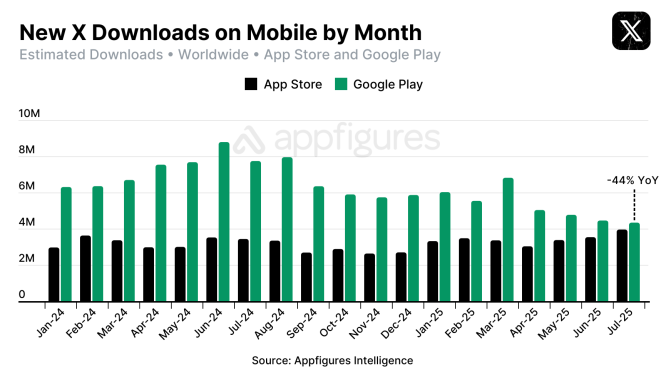
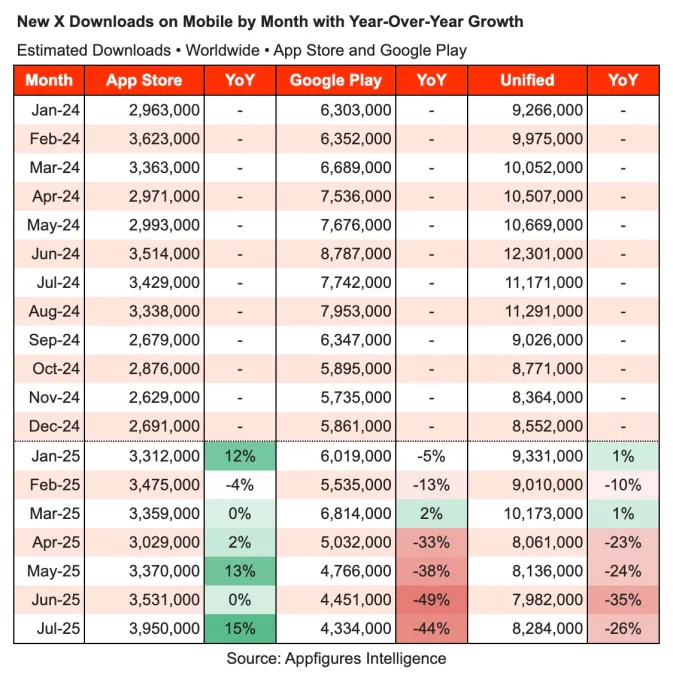
In July 2025, X experienced a mixed but concerning trend:
- Android installs on Google Play dropped 44% year-over-year globally
- iOS installs grew by about 15% year-over-year
- Overall mobile downloads still fell 26% year-over-year
This contrast highlights a structural issue: growth on one platform is not enough to compensate for losses on another when Android represents a major share of global usage.
The trend is not new either. In the previous month:
- Android installs had already dropped nearly 49% year-over-year
- Total downloads had fallen by about 35%
So while there is slight month-to-month fluctuation, the broader direction remains downward.
🌍 Why Android matters more than iOS for global scale
Even though iOS often gets more attention in tech reporting, Android dominates globally in terms of user base. That means:
- Android drives the majority of installs in many regions (Asia, South America, parts of Europe and Africa)
- Even moderate drops on Android can outweigh iOS growth
- App store performance on Google Play strongly affects total user acquisition
So when Android weakens, it creates a global slowdown effect—even if Apple’s ecosystem shows improvement.
In X’s case, the iOS growth is not strong enough to offset Android losses, leading to an overall contraction in installs.
⚠️ What could be driving the Android decline?
Appfigures does not confirm a single cause, but several likely factors are being discussed across the industry:
1. Long-standing Android app stability issues
The X Android app has historically been criticized for:
- Occasional crashes
- UI inconsistencies across devices
- Slower feature updates compared to iOS
- Performance issues on lower-end devices
These issues may discourage new users from completing installs or continuing usage.
2. Internal acknowledgment of Android problems
X leadership has indirectly recognized the problem. The company has reportedly begun efforts to rebuild Android development focus, including hiring initiatives described as an “Android Dream Team” aimed at improving performance and reliability.
This suggests the Android app is considered a strategic weakness internally, not just a minor bug backlog.
3. Increasing competition for attention
The broader social media landscape has become more fragmented:
- Some users explore alternatives like Bluesky
- Meta’s Threads continues expanding its mobile presence
- Users increasingly split time across multiple platforms instead of consolidating on one
Even if X still has large total usage, incremental growth is harder to sustain.
4. Possible product friction or user fatigue
Beyond technical issues, broader factors may also play a role:
- Changes in platform policies and verification systems
- Subscription paywalls affecting user experience
- Algorithm shifts impacting content visibility
- General platform fatigue among casual users
These factors often impact Android markets more heavily because Android has a larger proportion of new and price-sensitive users.
💰 Subscription revenue is also under pressure
The decline in installs is now showing up in monetization data.
In July 2025:
- X generated $16.9 million in net subscription revenue
- This is down from $18.8 million in March 2025
- June was slightly lower at $16.8 million, making July a small recovery but not a trend reversal
While subscriptions are not X’s main revenue source (ads remain dominant), they are still important for diversification and long-term stability.
The overall trend suggests:
- Fewer new users converting into paid subscribers
- Possible churn among existing subscribers
- Lower willingness to pay for premium features
🤖 The “Grok effect”: internal competition for subscriptions
A less obvious factor is internal cannibalization.
Some users who previously subscribed to X Premium primarily for AI-related features may now be shifting toward Grok, which has launched as a standalone AI app.
This creates a situation where:
- Users stay in the ecosystem
- But no longer pay for X directly
- Revenue shifts away from X subscriptions
So even if engagement remains stable, monetization can decline.
📊 The broader pattern: platform imbalance
When you combine all the data, a clearer picture emerges:
Android side
- Sharp install decline
- Reputation issues with app performance
- Possibly weaker retention and conversion
iOS side
- Moderate growth
- Stronger user engagement
- Better monetization efficiency
Business impact
- Overall downloads declining
- Subscription revenue weakening
- Increased reliance on ads
- More pressure to fix Android experience
🧩 Why this matters strategically
For a platform like X, Android weakness is not just a technical issue—it affects core business mechanics:
- User acquisition slows down
- Global expansion becomes harder
- Subscription base shrinks over time
- Developer perception of the platform weakens
If Android continues to lag, X risks becoming overly dependent on iOS-heavy markets, which limits scale in regions where Android dominates.
X is currently facing a two-speed ecosystem problem:
- iOS is stable and even growing
- Android is shrinking and dragging overall performance down
That imbalance is now visible not only in install numbers but also in subscription revenue trends.
Unless Android performance improves significantly—either through a rebuilt app experience or better stability—the gap between platforms will likely continue to shape X’s overall growth trajectory.