
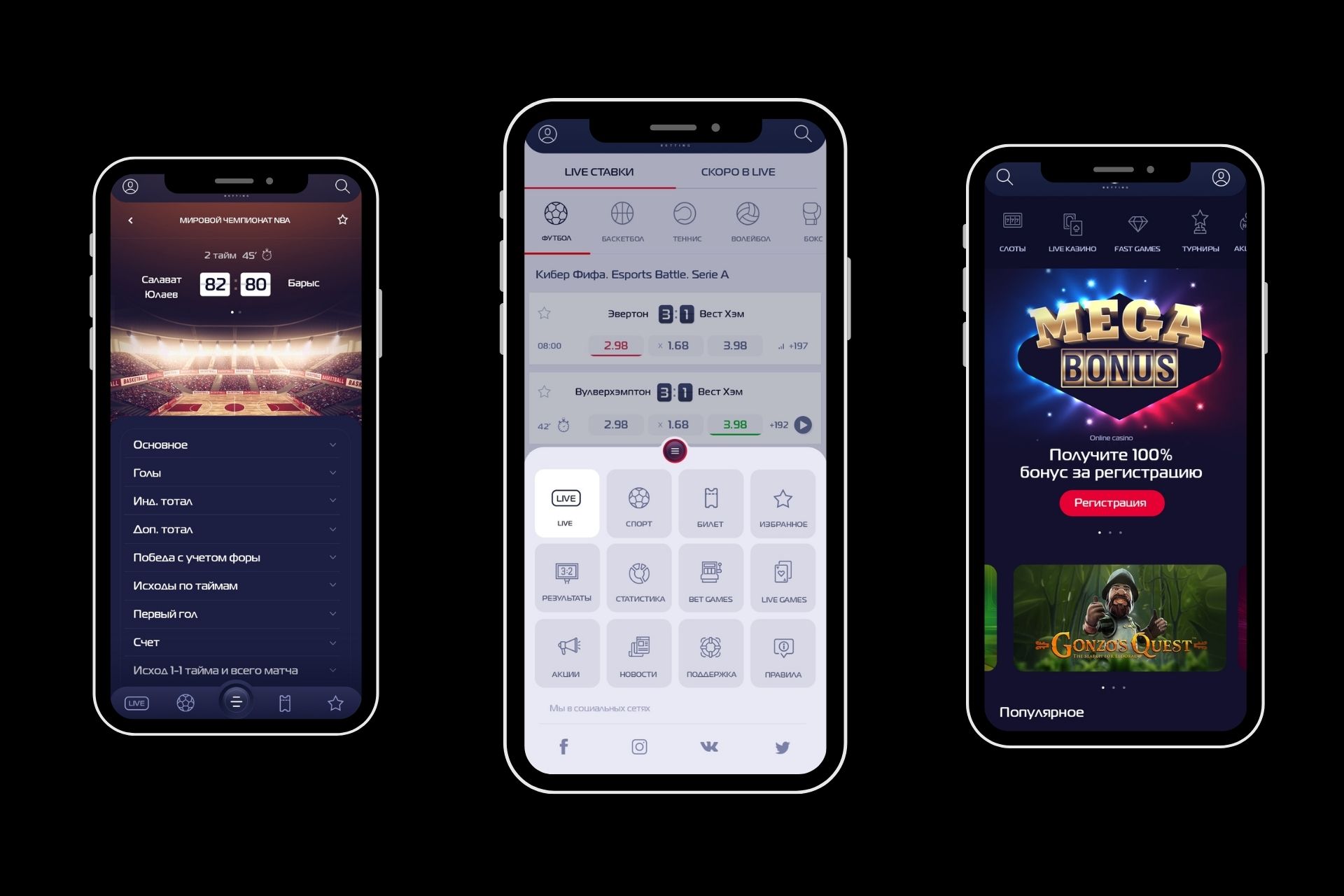
Mobile devices are where the majority of crypto casino, like parimatch.com/en/crypto-casino, players spend the majority of their time. The smartphone is not a secondary access point to a platform whose primary experience is desktop — it is, for most players, the primary and often only means of engaging with their favourite casino. Building a mobile application for a crypto casino that meets the expectations of this audience is one of the most demanding product development challenges in digital entertainment. This guide covers the key decisions, technical requirements and design considerations that define serious crypto casino mobile app development.
The Strategic Decision: Native App vs Progressive Web App
The first and most consequential decision in crypto casino mobile app development is the choice between native applications — separate iOS and Android apps distributed through the App Store and Google Play — and progressive web applications that run in the mobile browser but behave like native apps.
Native applications offer the best performance, access to device capabilities — biometric authentication, push notifications, camera access for KYC — and the credibility signal of App Store or Google Play presence. The user experience of a well-built native app is categorically superior to an equivalent web experience in ways that players notice, particularly for graphically intensive game content.
The challenge is that major app stores have restrictions on real-money gambling applications that create significant operational complexity. The App Store requires a gambling licence for the jurisdiction of the user and compliance with specific content guidelines. Google Play has similar requirements. Navigating these requirements successfully requires legal expertise alongside technical development capability, and the effort is ongoing — app store policy changes can affect previously approved applications.
Progressive web applications avoid the app store constraint entirely. A PWA is accessed through the mobile browser and can be added to the device home screen, providing an app-like experience without requiring app store distribution. For crypto casino operators who cannot meet app store requirements, or who want to launch quickly before investing in native app development, a well-built PWA is a viable and commercially proven approach.
The trade-off is a performance ceiling that, while improving with each browser generation, remains below what native apps can achieve — particularly for complex game animations and real-time data updates. Push notification support for PWAs is also more limited on iOS than on Android.
The hybrid approach — building a native app shell that wraps a web-based game and interface layer — sits between these options, providing app store presence and access to device capabilities while maintaining the flexibility of a web-based content layer that can be updated without app store review. Many crypto casino mobile apps use this architecture, which explains why the gaming content within them often behaves more like a web application than a native app.
Core Technical Architecture
The mobile application architecture of a serious crypto casino must address several technical requirements simultaneously.
State management is the foundational technical challenge of any real-time financial application. The app must maintain a consistent, accurate representation of player balance, active bets, game state and session status across network interruptions, app backgrounding, device sleep and all the other state transitions that mobile usage involves. A player who loses their active game state because they received a phone call has had a poor experience. A player whose balance display does not accurately reflect their actual balance has a serious problem.
Offline resilience is a requirement in mobile contexts where connectivity is intermittent rather than reliable. The app must handle network interruptions gracefully — preserving state, queuing operations that require connectivity and communicating clearly to the player about what is and is not available when the connection is degraded or absent.
Real-time data synchronisation for live betting odds, game outcomes and balance updates requires WebSocket connections or equivalent persistent communication channels that maintain low-latency data flow between the app and the platform backend. The management of these connections — reconnecting after interruption, handling data consistency across reconnections — is a technical challenge that requires careful implementation.
Background processing capabilities allow the app to receive push notifications for relevant events — match updates, promotional offers, bet settlements — even when the app is not in the foreground. The permission model for push notifications differs between iOS and Android and must be implemented in a way that maximises opt-in rates while respecting user preferences.
Cryptocurrency Wallet Integration
The wallet functionality of a crypto casino mobile app — enabling players to deposit, withdraw and manage their cryptocurrency balances — is the most technically distinctive component of the development challenge and the one that most differentiates crypto casino app development from conventional mobile gambling app development.
Address generation and display must present deposit addresses in a format that is immediately usable — large, legible text that is easy to copy, alongside a QR code that can be scanned by external wallet apps. The display must make clear which cryptocurrency and network the address corresponds to, as depositing to the wrong network is a common and often unrecoverable error.
Transaction status tracking must provide players with clear, real-time information about the status of deposits and withdrawals — confirmation counts for pending transactions, expected confirmation time based on current network conditions and clear notification when transactions are complete. The anxiety of not knowing whether a cryptocurrency transaction has gone through is a player experience problem that good mobile UI design can address.
WalletConnect and Web3 integration allows players to connect external wallets — MetaMask, Trust Wallet and other popular options — directly to the casino app, enabling transactions to be signed in the player’s own wallet rather than requiring them to transfer funds to a platform-controlled address first. This integration is technically more complex than simple address display but provides a significantly better experience for players who are accustomed to Web3 wallet workflows.
Lightning Network payments for Bitcoin-based platforms require integration with Lightning payment infrastructure that enables near-instant, low-fee deposits and withdrawals. The Lightning payment flow — generating invoices, scanning QR codes, handling payment confirmation — must be implemented in a way that is intuitive for players who may not be deeply familiar with Lightning’s technical model.
Game Integration on Mobile
The game library is the core product of any casino platform, and delivering it well on mobile requires technical and design work that goes well beyond simply scaling down desktop game content.
Game loading optimisation is critical for mobile contexts where data usage and loading time are more constrained than on desktop. Progressive loading strategies that get players into gameplay quickly while continuing to load additional assets in the background, aggressive caching of game assets that are likely to be used again, and image optimisation that reduces asset file sizes without visible quality degradation are all required components of a mobile-optimised game delivery strategy.
Touch interaction design for game controls requires specific attention. Bet sizing controls, spin buttons, card action buttons and navigation elements must be sized and positioned for finger interaction — not the pixel-precise targeting that a mouse cursor allows. The minimum touch target size of 44 points square recommended by Apple’s Human Interface Guidelines exists for good reason, and casino game interfaces that ignore it create frustration that accumulates into session abandonment.
Landscape and portrait orientation support must be considered for game content. Some game formats — particularly slot games — are designed for portrait orientation that matches the natural mobile phone grip. Others — particularly table games and live casino — benefit from landscape orientation that provides more screen real estate for complex game layouts. Handling orientation transitions gracefully, without losing game state or creating jarring visual transitions, is a technical requirement that must be explicitly addressed.
Live casino streaming on mobile requires video delivery that is optimised for mobile network conditions — adaptive bitrate streaming that adjusts quality based on available bandwidth, efficient codec choices that reduce data consumption and UI layouts that give the video feed sufficient prominence without overwhelming the betting controls that must remain accessible.
KYC and Compliance on Mobile
Identity verification and regulatory compliance flows present specific mobile design challenges that desktop implementations do not encounter in the same form.
Document capture for KYC verification — photographing identity documents and taking selfies for liveness checks — must be implemented in a way that produces images of sufficient quality for verification while being simple enough for non-technical users to complete without assistance. Camera access permissions must be requested with clear explanation of why they are needed and what they will be used for.
Biometric authentication — Face ID, Touch ID and equivalent Android authentication methods — provides a frictionless authentication experience that is both more secure than password entry and more convenient for mobile users. Integration with the device’s biometric authentication system requires handling the range of device capabilities across the app’s supported device base and graceful fallback for devices without biometric capability.
Geolocation compliance — verifying that players are accessing the platform from jurisdictions where it is licensed — requires location permission that must be requested carefully and transparently. Players who do not understand why a casino app needs their location are likely to deny the permission, which may prevent them from accessing the platform in jurisdictions where geolocation is required for compliance.
Performance Optimisation
Mobile performance optimisation for a crypto casino app is a continuous engineering effort rather than a one-time task.
Render performance — maintaining smooth 60 frames per second animation and interaction throughout the app — requires profiling, identifying bottlenecks and optimising the specific code paths that are causing performance problems. Game animations that drop frames feel cheap and undermine player confidence in the platform quality. Interaction responses that lag behind touch input feel broken.
Memory management is more constrained on mobile than on desktop, and casino apps that hold large quantities of game assets in memory simultaneously will be terminated by the operating system when memory pressure becomes too high. Careful asset lifecycle management — loading assets when needed and releasing them when no longer required — maintains memory usage within acceptable bounds.
Battery consumption is a player experience concern that desktop applications do not face. An app that drains battery rapidly will be closed by players who are concerned about their device running out of charge. CPU and GPU usage optimisation that reduces battery drain without compromising the experience is part of the mobile performance engineering challenge.
Network efficiency — minimising the data transferred between the app and backend for each player interaction — reduces both latency and data usage costs for players on metered mobile connections. Efficient API design, appropriate use of compression and avoidance of unnecessary data transfer are all components of network efficiency optimisation.
Testing Strategy for Mobile Casino Apps
The testing requirements of a crypto casino mobile app are more extensive than those of most mobile applications because the consequences of bugs are financial rather than merely experiential.
Device fragmentation testing must cover the range of devices and operating system versions that the app’s player base actually uses. A bug that only affects a specific Android manufacturer’s implementation of a particular OS version may affect a significant fraction of the player base if that manufacturer is popular in the target market.
Financial transaction testing must verify that every financial operation — deposit crediting, withdrawal processing, bet settlement, balance update — behaves correctly under all conditions, including network interruption mid-transaction, concurrent operations and edge cases in amount handling.
Security testing must include penetration testing of the mobile app specifically — examining the app binary for exposed credentials, testing API endpoints for authentication vulnerabilities and verifying that sensitive data is not stored insecurely on the device.
Performance testing under realistic load conditions — many concurrent users, slow network conditions, low-end device hardware — verifies that the app performs acceptably for the full range of its player base rather than only for ideal conditions.
App Store Submission and Maintenance
For platforms pursuing native app distribution, the app store submission process for gambling applications requires preparation that goes beyond standard app submission.
Licence documentation for each jurisdiction where the app will be available must be prepared and submitted with the app review. App store reviewers will verify that the operator holds appropriate licences for the jurisdictions the app targets.
Age verification mechanisms must be implemented in a way that satisfies app store requirements for gambling applications. The specific implementation requirements vary by platform and jurisdiction and must be researched carefully before submission.
Ongoing compliance with app store policies for gambling applications requires monitoring policy updates and updating the app as requirements change. App store policies for gambling applications are among the most actively updated categories, and a previously approved app can fall out of compliance with a policy change.
Conclusion
Developing a mobile application for a crypto casino is one of the most technically demanding projects in mobile development — combining the complexity of financial application development with the performance requirements of gaming, the regulatory requirements of gambling compliance and the distinctive technical challenges of cryptocurrency integration. The teams that approach this challenge with appropriate expertise, rigorous testing and genuine commitment to the player experience build mobile products that drive real competitive advantage. Those that treat it as a standard mobile app development project discover its true complexity at the worst possible moment.